CAT 2024 Slot 2 DILR · Set 1 of 5Logical ReasoningHard DifficultyQ1–Q5 · 2 MCQ + 3 TITA

CAT 2024 Slot 2 DILR Set 1: Arrangements (5 Questions) with Solutions

The Arrangements set from the official CAT 2024 Slot 2 DILR paper: the caselet, all 5 questions, the official answer key and a step-by-step solution for each. 100% free, no sign-up.

The Set: Read the Caselet First

CAT 2024 Slot 2 DILR · Questions 1–5
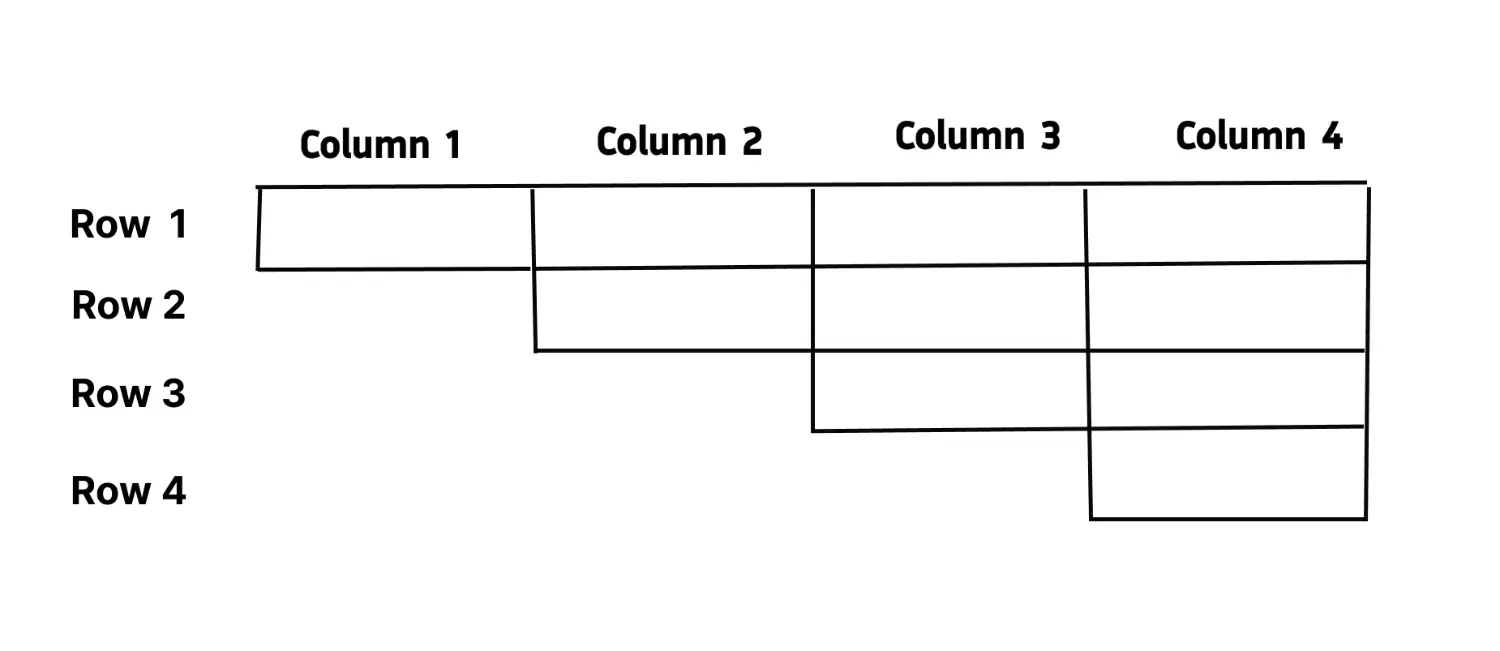
The numbers 1, 2, 3, 4, 5, 6, 7, 8, 9, and 10 are placed in ten slots of the following grid based on the conditions below.
1
Numbers in any row appear in an increasing order from left to right.
2
Numbers in any column appear in a decreasing order from top to bottom.
3
1 is placed either in the same row or in the same column as 10.
4
Neither 2 nor 3 is placed in the same row or in the same column as 10.
5
Neither 7 nor 8 is placed in the same row or in the same column as 9.
6
4 and 6 are placed in the same row.
Official Reference Chart - CAT 2024 Slot 2 Official Reference Chart - CAT 2024 Slot 2

In the exam this set competed with 4 others for 40 minutes. Budget about 8 minutes if you attempt it.

Q1. Arrangements

TITA · +3 / 0
What is the row number which has the least sum of numbers placed in that row?
Correct Answer
4
Step-by-step solution
📌 Core Concept
The grid is a staircase, and the two ordering rules plus the six conditions fix the whole arrangement up to a swap of 2 and 3. Row sums can then be compared directly.
🔢 Step-by-Step Solution
1
The shape from the image: Row 1 has columns 1-4, Row 2 has columns 2-4, Row 3 has columns 3-4, Row 4 has only column 4. Call the cells a1-a4 (Row 1), b2-b4 (Row 2), c3-c4 (Row 3) and d4 (Row 4).
2
Rows increase to the right and columns decrease downward. So a4 is larger than every other cell, and a4=10a_4 = 10.
3
9 must sit directly below 10 in the order, so it is in a3 or b4.
4
Condition 4 keeps 2 and 3 out of Row 1 and Column 4. Only b2, b3 and c3 remain. Condition 3 puts 1 in a1 or d4, so 2 and 3 take b2 and c3 in some order.
5
If 9 is in b4, condition 5 forces 7 and 8 into a2 and a3. Then 4 and 6 have no common row, which breaks condition 6. So 9 is in a3.
6
With 9 in a3, condition 5 pushes 7 and 8 into c4 and b4, so c4=7c_4 = 7 and b4=8b_4 = 8.
7
Condition 6 now needs 4 and 6 in Row 1, so a1=4a_1 = 4 and a2=6a_2 = 6. That leaves d4=1d_4 = 1 and b3=5b_3 = 5.
8
Final grid: Row 1: 4, 6, 9, 10. Row 2: 2 or 3, 5, 8. Row 3: 3 or 2, 7. Row 4:
1
9. Row sums: Row 1 = 29, Row 2 = 15 or 16, Row 3 = 10 or 9, Row 4 = 1.
Quick Check
Row 4 holds a single number, 1, which is smaller than any other row sum.
Correct Answer: 4

Q2. Arrangements

MCQ · +3 / −1
Which of the following statements MUST be true?
I
10 is placed in a slot in Row
1.
II
1 is placed in a slot in Row 4.
  1. A) Only II
  2. B) Both I and II
  3. C) Only I
  4. D) Neither I nor II
Correct Answer
B) Both I and II
Step-by-step solution
📌 Core Concept
The grid is a staircase (Row 1 has Columns 1 to 4, Row 2 has Columns 2 to 4, Row 3 has Columns 3 to 4, Row 4 has only Column 4). Conditions 1 and 2 order the numbers, and conditions 3 to 6 then pin down the placement.
🔢 Step-by-Step Solution
1
Name the slots by position, for example R1C4 for Row 1, Column 4. Rows rise left to right and columns fall top to bottom. So R1C4 is larger than every slot in its row and column, and every other slot sits below it in a chain (R1C3 > R2C3 > R3C3, R1C4 > R2C4 > R3C4 > R4C4, R1C2 > R2C2, and so on). Hence 10 is in R1C4.
2
Condition 3 puts 1 in Row 1 or Column 4. Only R1C1 (Row 1) and R4C4 (Column 4) are possible, because R2C2 and R3C3 are not in either line.
3
Condition 4 keeps 2 and 3 out of Row 1 and Column 4. They must therefore be in R2C2, R2C3 or R3C3. R2C3 is larger than both R2C2 and R3C3, so it cannot hold 2 or 3 without forcing a 1 into R2C2 or R3C3. So 2 and 3 are in R2C2 and R3C3.
4
The only slots that can hold 9 are those just below 10, namely R1C3 and R2C4. Try 9 in R2C4. Then condition 5 keeps 7 and 8 out of Row 2 and Column 4, so they must be in R1C1, R1C2, R1C3, and they would be R1C2 and R1C3. That leaves 4, 5, 6 and 1 for R1C1, R2C3, R3C4, R4C4. No row has room for two of them (R1C1, R2C3 and R3C4 are each alone in their row among these slots), so condition 6 fails. Hence 9 is in R1C3.
5
With 9 in R1C3, 7 and 8 must avoid Row 1 and Column 3, so they fall in R2C4 and R3C4, giving R2C4 = 8 and R3C4 = 7. The leftover numbers 1, 4, 5, 6 go to R1C1, R1C2, R2C3, R4C4. Condition 6 needs 4 and 6 in the same row, which only Row 1 allows: R1C1 = 4, R1C2 = 6. Then R2C3 = 5 and R4C4 = 1.
6
Final grid: Row 1: 4, 6, 9, 10. Row 2: (2 or 3), 5, 8. Row 3: (3 or 2), 7. Row 4:
1
7.
Statement I
10 is in R1C4, so it is in Row 1. True.
Statement II
1 is in R4C4, so it is in Row 4. True.
Quick Check
Row 1 is 4 < 6 < 9 < 10 and Column 4 is 10 > 8 > 7 > 1, so both orderings hold.
Correct Answer: B

Q3. Arrangements

MCQ · +3 / −1
Which of the following statements MUST be true?
I
2 is placed in a slot in Column 22.
II
3 is placed in a slot in Column 33.
  1. A) Neither I nor II
  2. B) Only I
  3. C) Both I and II
  4. D) Only II
Correct Answer
A) Neither I nor II
Step-by-step solution
📌 Core Concept
The grid is a staircase (Row 1 has Columns 1 to 4, Row 2 has Columns 2 to 4, Row 3 has Columns 3 to 4, Row 4 has only Column 4). The ordering rules plus conditions 3 to 6 fix every number except the positions of 2 and 3.
🔢 Step-by-Step Solution
1
R1C4 is larger than every slot in its row and column, and every other slot sits below it in a chain, so 10 is in R1C4.
2
Condition 3 puts 1 in Row 1 or Column 4, so 1 is in R1C1 or R4C4. Condition 4 keeps 2 and 3 out of Row 1 and Column 4, so they are in R2C2, R2C3 or R3C3. R2C3 exceeds both R2C2 and R3C3, so it cannot be 2 or 3. Hence 2 and 3 occupy R2C2 and R3C3 in some order.
3
9 can only sit just below 10, in R1C3 or R2C4. With 9 in R2C4, 7 and 8 would have to go in Row 1 (R1C2, R1C3), and no row could then hold both 4 and 6, which breaks condition 6. So 9 is in R1C3, 7 and 8 are in R3C4 and R2C4, and condition 6 forces 4 and 6 into R1C1 and R1C2.
4
The final grid is: Row 1: 4, 6, 9, 10. Row 2: (2 or 3), 5, 8. Row 3: (3 or 2), 7. Row 4:
1
5. Nothing in the conditions decides which of R2C2 and R3C3 holds 2. Both 2 in R2C2 with 3 in R3C3, and 3 in R2C2 with 2 in R3C3, satisfy the row order, the column order and conditions 3 to 6.
6
Statement I (2 is in Column 2) is false in the second arrangement, where 2 is in Column 3. Statement II (3 is in Column 3) is false in the first arrangement, where 3 is in Column 2. Neither statement must be true.
Correct Answer: A

Q4. Arrangements

TITA · +3 / 0
For how many slots in the grid, placement of numbers CANNOT be determined with certainty?
Correct Answer
2
Step-by-step solution
📌 Core Concept
Solve the grid using the ordering rules and conditions 3 to 6. Then count the cells whose number is not unique.
🔢 Step-by-Step Solution
1
The shape from the image: Row 1 has 4 cells, Row 2 has 3, Row 3 has 2, Row 4 has 1, giving 10 cells.
2
Rows increase rightward and columns decrease downward, so 10 is in the top-right cell, and 9 is in a3 or b4.
3
If 9 were in b4, condition 5 would force 7 and 8 into a2 and a3. Then 4 and 6 would need a common row, and none is available. So 9 is in a3.
4
Condition 5 then forces b4=8b_4 = 8 and c4=7c_4 = 7.
5
Condition 6 forces 4 and 6 into Row 1, so a1=4a_1 = 4 and a2=6a_2 = 6. That makes d4=1d_4 = 1, which is in Column 4 with 10 as condition 3 requires. The remaining cell gives b3=5b_3 = 5.
6
Condition 4 keeps 2 and 3 out of Row 1 and Column 4. They fill b2 and c3, and nothing decides which is which.
7
The cells with an undetermined number are b2 and c3, which makes 2 slots. The other 8 are fixed.
Quick Check
Swapping 2 and 3 in b2 and c3 keeps every condition valid, so those 2 slots are not determined.
Correct Answer: 2

Q5. Arrangements

TITA · +3 / 0
What is the sum of the numbers placed in Column 4?
Correct Answer
26
Step-by-step solution
📌 Core Concept
Solve the staircase grid. Column 4 is the full-height column, with one cell in each of the four rows.
🔢 Step-by-Step Solution
1
The shape from the image: Row 1 has columns 1-4, Row 2 has columns 2-4, Row 3 has columns 3-4, Row 4 has column 4 only. Column 4 therefore has four cells.
2
Rows increase rightward and columns decrease downward, so 10 is in the top-right cell, which is the top of Column 4.
3
9 is in a3 or b4. If 9 were in b4, condition 5 would force 7 and 8 into a2 and a3, and 4 and 6 could not share a row. So 9 is in a3.
4
Condition 5 then forces 8 and 7 into b4 and c4, so b4=8b_4 = 8 and c4=7c_4 = 7 (Column 4 decreases downward).
5
Condition 6 puts 4 and 6 in Row 1, so a1=4a_1 = 4 and a2=6a_2 = 6. That leaves 1 for the last cell of Column 4, d4=1d_4 = 1. This also satisfies condition 3, since 1 shares Column 4 with 10.
6
Column 4 from top to bottom is 10, 8, 7, 1, and its sum is 10+8+7+1=2610 + 8 + 7 + 1 = 26.
Quick Check
The full grid uses 1 to 10 once each: 4, 6, 9, 10 / 2 or 3, 5, 8 / 3 or 2, 7 / 1. Each row increases and each column decreases downward.
Correct Answer: 26
Timed Practice

Attempt the full CAT 2024 Slot 2 paper as a free mock

All three sections, 120 minutes, in the TCS iON-style simulator. Free, no sign-up.

Start Free Mock

CAT 2024 Slot 2 DILR at a Glance

Sets in this section5
Questions in this section22
Section time40 minutes
Convenor IIMIIM Calcutta

More CAT DILR Sets with Solutions